RAGbase Blog
Insights on legal AI: pricing, privilege, agentic workflows, and the ownership model.
EU AI Act + ABA 512: Audit Trails Are Now Mandatory for Legal AI
The EU AI Act's August 2026 application date plus ABA Formal Opinion 512 make audit trails and governance mandatory for legal AI, not optional.
Read ArticleWhen Your eDiscovery Vendor Gets Sold: The UnitedLex Lesson
UnitedLex's sale from CVC to Repario Data shows how law firm client data changes hands in PE-driven ALSP M&A — and why on-prem AI is the alternative.
2,046 AI Hallucination Cases: Why Architecture Is the Fix
AI hallucination cases hit 2,046 nationwide. See why retrieval-grounded, auditable AI architecture — not lawyer diligence alone — is the real control layer.
EU AI Act Enforcement Meets Schrems II in Shared-Cloud Legal AI
EU AI Act high-risk rules start August 2026, triggering Transfer Impact Assessments for cross-border LLM calls. Here's the architecture that limits the exposure.
BigLaw Is Building Its Own AI Infrastructure. Should You?
Latham's GPUs and Kirkland's Palantir deal prove sensitive data needs firm-controlled AI infrastructure. Here's the middle path for mid-market firms.
Morgan & Morgan's $1B AI Bet: A Wake-Up Call for BigLaw
Morgan & Morgan built proprietary AI instead of buying it. Here's what that reveals about data sovereignty, and how firms without $1B can get the same control.
Private vs. Sovereign: The Legal AI Distinction That Matters
Vendors say 'private deployment,' but most legal AI runs on shared cloud infrastructure subject to foreign compulsion laws. Here's the real difference.
EU AI Act 2026: Data Governance Becomes a Technical Test
EU AI Act high-risk rules are now fully in force. Learn why law firm AI compliance now demands provable data lineage, not just written policy.
Greenberg Traurig Breach: Why BigLaw Scale Can't Buy Security
Greenberg Traurig's 256,000-record breach and two class actions show why AmLaw 200 budgets don't fix shared-infrastructure risk. See what architecture actually prevents.
Storage Sovereignty Is Dead: Why Stack Control Defines Legal AI
SOC 2 badges no longer prove data control. Learn why stack sovereignty — who owns the retrieval index and workflow layer — is the new legal AI test.
Why Guardrails Can't Be Acquired: Lessons From Shared-Cloud Legal AI
A $15.5B legal AI vendor just acquired a guardrails startup post-launch. Here's why safety and data sovereignty must be architected in, not bolted on.
Legal AI Architecture: Cloud API vs. On-Prem vs. Hybrid
Cloud API, on-prem, or hybrid: the September 2026 State of Play report shows architecture, not vendor promises, decides legal AI's audit defensibility.
507 Fabricated Citations: A Legal AI Architecture Failure
507 of 566 court filings cited fake cases. Learn why shared-cloud legal AI can't catch hallucinations and what a grounded architecture requires.
507 of 566: What the Fabricated-Citation Tracker Reveals
A tracker now shows 507 of 566 AI court filings hit by fabricated citations. Here's why architecture, not caution, fixes this.
Zero Retention Isn't Data Sovereignty: The Gap in Legal AI Contracts
Zero-retention clauses hide the real question: where does data live during processing? A look at the architecture that actually determines legal AI risk.
Legal AI's Reference Architecture Has Standardized. Who Owns It?
Gateway, retrieval, and eval have become the standard legal AI stack in 2026. Here's why owning that architecture beats renting it through per-seat SaaS.
Agentic Legal AI: Why the Scaffolding Matters More Than the Model
Agentic AI in law firms raises new risk questions. Learn why the scaffolding — not the model — determines what your AI agent can see and touch.
Agentic AI in Law Firms: Why Architecture Beats the Model
Agentic AI raises the stakes for law firms. Learn why the architecture behind autonomous legal AI agents matters more than model quality.
Law Firm Ransomware Surge: Why On-Prem AI Matters Now
200+ law firm ransomware attacks since 2025 expose cloud AI risks. See why private, on-premise AI reduces exfiltration exposure vs shared-cloud legal AI tools.
L1 to L4: The Data Sovereignty Grid Reshaping Legal AI Procurement
A tiered sovereignty framework (L1–L4) now used to evaluate legal AI vendors beyond marketing claims — and where private AI deployment models actually sit.
300,000 Documents, One Month: Inside a Private AI Deployment
How a mid-sized firm cut drafting time 70% by indexing 300K documents on private infrastructure — and what it means for EU AI Act compliance.
Consumer AI Assistants Are Now a Documented Privilege Risk in Litigation
Courts are compelling disclosure of prompts sent to public AI tools. Here's why on-premise AI architecture is now a privilege-protection strategy, not just IT policy.
Every LLM API Call Is Now a Cross-Border Compliance Event
A late-2025 ECJ ruling and the EU AI Act turn each hosted LLM query into a GDPR transfer event. Here's the architecture that changes the calculus.
The Real AI Moat: Your Firm's Archive, Not the Model
Legal AI's real advantage isn't the LLM — it's making 15 years of briefs, memos, and partner judgment searchable without leaving your firm's perimeter.
Gemini Enterprise for Legal: Why Shared-Cloud AI Still Isn't Sovereign
Google's Gemini Enterprise for Legal signs four AmLaw firms. We examine why shared-cloud legal AI still can't match on-prem for privilege and data sovereignty.
EU AI Act High-Risk Rules: Why Stack Control Beats Data Residency
EU AI Act high-risk obligations took effect Aug 2026. Learn why data residency no longer satisfies compliance—and why owning the AI stack does.
Legal AI Due Diligence: The Questions Procurement Misses
Choosing a legal AI vendor isn't about picking the smartest model. Here's the three-question architecture framework managing partners need before signing.
Data Sovereignty vs. Residency: The Real Legal AI Risk
Data residency isn't data sovereignty. See why CLOUD Act exposure means server location doesn't protect privileged legal data—and what does.

The 3 Questions Managing Partners Skip Before Buying Legal AI
Before signing a legal AI contract, ask where documents live, who produces audit trails, and whether switching models means migration. Here's why.
Shared-Cloud Legal AI: Where Does Your Firm's Data Actually Go?
A guide for AmLaw 200 leaders on how shared-cloud legal AI architectures move data, why it matters, and what to ask before your next AI procurement.
The Legal AI Architecture Decision That Determines Everything
Enterprise legal AI has converged on three deployment architectures. The one you choose determines defensibility, TCO, and audit posture — not which LLM you use.
EU AI Act 2026: Why Audit Trails Are Now a Legal Obligation
The EU AI Act's Article 14 creates a new burden of proof for law firms using AI. Here's what that means for your infrastructure decisions before August 2026.
Legal AI's Transparency Gap Is Now a Client Retention Problem
69% of legal professionals use generative AI, yet 60% of in-house clients don't know if their firms use it. Here's why that gap is a client relationship crisis.
EU AI Act 2026: Why Private AI Is Now a Compliance Requirement
EU AI Act full enforcement hits August 2026. Combine that with the Heppner privilege ruling and cloud legal AI becomes a compliance liability. Here's the architecture that works.
AI Platforms and Privilege Waiver: What Courts Are Deciding
Federal courts are ruling on whether AI platforms waive privilege by ingesting your inputs. The architectural answer matters more than the ToS. Here's what to do.
Data Sovereignty in Legal AI: What AmLaw Firms Risk With Public Tools
AmLaw 200 firms face real data exposure using public AI tools. Here's the architectural truth about what leaves your infrastructure—and what must not.
AI Prompts Are Discoverable. Is Your Firm Ready?
New rulings from Texas and Connecticut show AI prompts and methodologies can lose work product protection. Here's what law firms must do now.
Harvey AI Problems: What Law Firms Are Actually Complaining About
Harvey AI is winning pilots but losing trust at scale. Here's what managing partners and CIOs are discovering—and what the architectural alternatives look like.
Harvey AI's Token Problem: What Flat-Fee Legal AI Really Costs
Harvey AI's flat per-seat model creates a hidden incentive paradox. Here's what AmLaw firms need to know about token economics and AI sovereignty.
Harvey's Token Problem: Why AI Ownership Beats SaaS for Law Firms
Harvey AI's token economics expose a structural flaw in legal AI SaaS. Learn why on-premise AI ownership gives AmLaw firms better economics and control.
Legal AI's Data Sovereignty Crisis: What June 2026 Changes
AmLaw 200 firms face a critical inflection point in legal AI governance. Here's what the June 2026 landscape means for your data strategy and client obligations.
Why Legal AI Pricing Models Are Broken — And What to Do About It
Most legal AI vendors profit when your firm uses more compute. RAGbase Legal's ownership model realigns incentives. Here's what managing partners need to know.
AI Hallucinations in Court: What the Mississippi Ruling Means for Your Firm
A U.S. District Court ruling in Mississippi signals growing judicial scrutiny of AI-generated legal work. Here's what AmLaw 200 firms must do now.
The Heppner Ruling Makes Private AI a Compliance Imperative
The Heppner ruling confirmed July 2026: public AI tools with data-retention terms destroy attorney-client privilege. Here's what it means for your firm.
AI Hallucinations Got a Lawyer Sanctioned. Your Firm Is Next.
Mississippi sanctions expose the professional risk of unverified AI citations. Learn how private, retrieval-grounded AI architecture protects your firm's reputation.
When AI Gets It Wrong: The Malpractice Math Law Firms Can't Ignore
AI hallucinations in legal work aren't hypothetical—they're triggering sanctions, bar complaints, and malpractice claims. Here's the real risk calculus for AmLaw firms.
AI Vendor Agreements: What In-House Legal Teams Must Get Right
In-house legal teams are building AI governance frameworks fast. Here's what robust vendor agreements and internal policies actually require in 2025.
The AmLaw 200 AI Adoption Wave: What's Actually Working
AmLaw 200 firms are moving past pilots into full legal AI deployment. Here's what's driving adoption, what's stalling it, and what infrastructure decisions matter most.
AI Governance Frameworks for Law Firms: The Sovereignty Imperative
As AI matures in legal, governance frameworks and data sovereignty are top priorities. Learn why on-premise AI architecture is the compliance advantage AmLaw 200 firms need.
Legal AI in June 2026: The Sovereignty Reckoning
AmLaw 200 firms are hitting a wall with cloud-native legal AI. Here's what the June 2026 inflection point means for your firm's data architecture.
700 Lawyers Chose ChatGPT Research in 6 Weeks. Now What?
Descrybe's rapid growth inside ChatGPT reveals a demand signal your legal ops team can't ignore — and an infrastructure gap you need to close before associates do it for you.
CoCounsel's Generational Refresh: Capability vs. Control
Thomson Reuters' next-gen CoCounsel raises a critical TCO question for mid-market firms: who owns your retrieval layer when the vendor changes its terms?
Your Cloud AI Tool Could Be Exhibit A Against Your Client
US v. Heppner confirms public AI chatbots destroy attorney-client privilege. Here's why private AI architecture is now a privilege-preservation necessity for law firms.
Harvey's LAB Benchmark Changes Legal AI Procurement Forever
Harvey's LAB open-source benchmark tests 1,200+ legal AI tasks across 24 practice areas. Here's what it means for law firm buyers and AI vendors alike.
Nvidia Backs Legora: The Legal AI Infrastructure War Begins
Nvidia's $50M bet on Legora at a $5.6B valuation signals legal AI is now an infrastructure play. What this means for law firms choosing their AI stack.
Shadow AI in Law Firms: The Governance Gap Is a Structural Crisis
69% of legal professionals now use generative AI—many without firm approval. Here's why ungoverned shadow AI is a structural risk, and how private agentic infrastructure solves it.
Federal Courts Rule Public AI Destroys Privilege: What Firms Must Do Now
SDNY's Heppner ruling and a Q1 2026 circuit split mean public AI tools may strip attorney-client privilege. Here's the architectural fix law firms need.
The Heppner Ruling Drew a Bright Line Between Consumer and Enterprise AI
A federal court ruled consumer AI tools forfeit privilege protections. Here's what the Heppner decision means for law firm AI strategy in 2026.
AI Tools and Privilege: What Your Infrastructure Must Show
A Q1 2026 circuit split on AI work product protection means your tool's data architecture is now a privilege argument. Here's what law firms need to prove.
Agentic Contract Review Is Here: 3 Infrastructure Questions Before You Deploy
Spellbook's ACM shows agentic legal AI is production-ready. Before your firm adopts it, three infrastructure questions that determine who actually controls the workflow.
Two Courts Voided AI Decisions in One Month. Is Your Firm Next?
India's Supreme Court and a Canadian arbitral panel both struck down AI-assisted decisions in the same week. Here's what the audit trail problem means for AmLaw firms.
AI Agents Are Coming for 30% of Legal Work — Data Sovereignty Can't Wait
Deloitte projects AI agents will handle 30% of legal work within 5 years. Here's why autonomous workflows make data sovereignty a governance emergency for AmLaw 200 firms.
Harvey AI's Memory Problem: What It Reveals About Legal AI Architecture
Harvey AI's document memory limitations expose a deeper architectural flaw in off-the-shelf legal AI. Here's what law firm CIOs need to understand before scaling.
Legal AI Data Sovereignty: Why Architecture Is the Real Risk
Managing partners and CIOs: understand why AI architectural control—not just vendor promises—determines your firm's data sovereignty and client trust.

Harvey AI's Memory Problem: Why Context Matters More Than Features
Harvey AI users report frustrating memory issues requiring repeated document uploads. Why off-the-shelf solutions fail and how architectural design solves it.

The Legal AI Usability Gap: Why Integration Beats Innovation
AmLaw 200 firms report 73% of AI pilots fail on integration, not capability. How architectural choices determine real-world adoption success.

The Control Paradox: Why Agentic AI Success Breeds Security Concerns
Agentic AI adoption is surging at law firms, but control and security concerns are rising. How private deployment solves the autonomy vs. sovereignty dilemma.
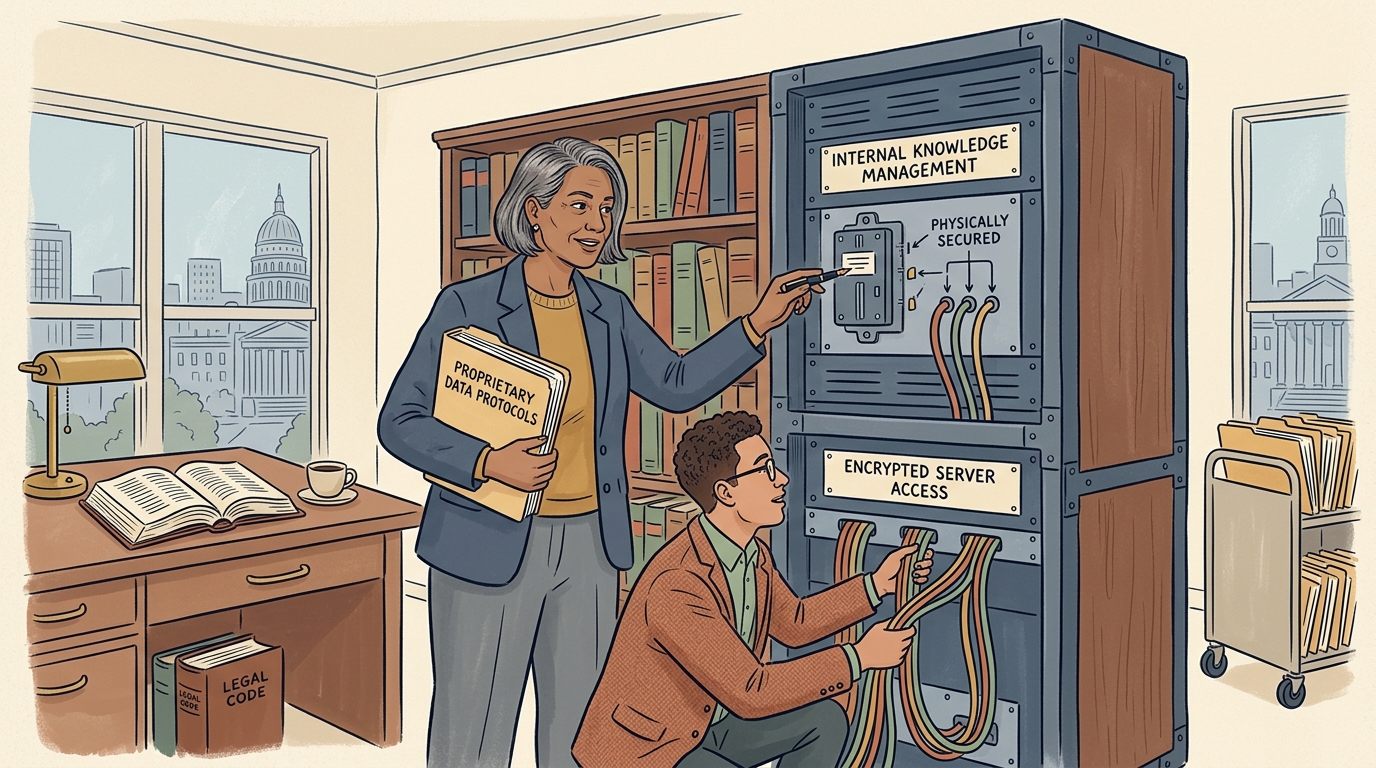
Agentic AI Infrastructure: Why Legal Firms Need Control, Not Just Tools
AmLaw 200 firms are discovering that agentic AI's real value lies in infrastructure control—not just model access. Here's the architecture that matters.

Legal AI in June 2026: The 72% Adoption Reality Check
72% of AmLaw 200 firms use AI daily, but sovereignty gaps persist. Analysis of current legal AI adoption patterns, infrastructure choices, and strategic implications.

Data Sovereignty in Legal AI: Complete Guide for Law Firm Leaders
Essential guide to data sovereignty for legal AI deployment. Learn infrastructure choices, compliance requirements, and decision frameworks for AmLaw 200 firms.

FBI Warning: How Silent Ransom Group Exposes Law Firm AI Vulnerabilities
FBI warns of Silent Ransom Group targeting law firms through social engineering. How on-premise AI reduces attack surface and protects client data.

Legal AI Data Sovereignty: Why AmLaw Firms Are Rethinking Control
New data sovereignty requirements are reshaping legal AI adoption. See why 73% of AmLaw firms are exploring private deployment options for client-sensitive work.

Anthropic's Claude For Legal: Practice Plugins vs Private Deployment
Anthropic launches practice-specific legal plugins for Claude. How it compares to private AI deployment for sensitive legal work and data sovereignty.

Court Rules AI Prompts Discoverable: Why Legal AI Security Matters Now
Federal court orders AI prompts discoverable under Rule 26. What this means for law firms using AI tools and why data sovereignty is critical.

Client Pressure for AI Adoption: Balancing Innovation and Data Security
How AmLaw 200 firms can meet client AI demands without compromising data sovereignty. Private deployment strategies that satisfy both innovation and security.

Alabama Supreme Court AI Citation Failure: A $2M Lesson in Legal AI Risk
Alabama Supreme Court dismisses appeal over AI-generated fake citations. Analysis of the $2M case and how firms can prevent AI hallucinations in legal research.

Agentic AI's Hidden Risk: Why Legal Oversight Models Are Breaking
Agentic AI systems operate beyond traditional oversight frameworks. Learn how AmLaw 200 firms are adapting governance for autonomous legal AI workflows.

AI Agent Architecture: Where Your Legal AI Does Its Thinking Matters
Most legal AI tools expose case strategy at the orchestration layer. Private agent architecture keeps reasoning on your infrastructure while reducing drafting time 5-70%.

Colorado's AI Act Repeal: Why Law Firms Need Adaptable AI Infrastructure
Colorado replaced its strict AI Act with lighter disclosure rules. Law firms need flexible, on-premise AI solutions to adapt to evolving regulations.

Nippon Life's OpenAI Lawsuit Exposes New Legal AI Liability Risks
Nippon Life's unauthorized practice of law suit against OpenAI reveals critical liability gaps in legal AI deployment. How firms can mitigate exposure.

Private AI Agent Architecture: Where Legal Reasoning Happens Matters
Why AmLaw firms are choosing private agent orchestration over SaaS AI tools. See how architecture affects case strategy visibility and data sovereignty.

Anthropic's Westlaw Integration Exposes Legal AI's Data Control Gap
Anthropic's new legal AI tools raise critical questions about data sovereignty. Why private deployment architecture matters for sensitive legal work.

Harvey's $11B Valuation: What It Means for Law Firm AI Strategy
Harvey's massive funding round signals AI's legal future. But for AmLaw 200 firms, the real question is data sovereignty vs. convenience.

Connecticut's AI Bill SB5: What Law Firms Must Know for 2024
Connecticut's comprehensive AI bill SB5 sets new compliance standards for law firms. Analysis of requirements, penalties, and infrastructure implications.

From Adoption to Orchestration: Legal AI's Next Evolution
AmLaw 200 firms are moving beyond basic AI tools to orchestrated workflows. Learn why architectural control matters more than model choice.

Harvey's 500+ AI Agents Signal the Agentic AI Revolution in Law
Harvey releases 500+ AI agents and builder tools, highlighting the shift to customizable legal AI. Why architectural control matters for AmLaw firms.

Sullivan & Cromwell's AI Errors: Why Private Legal AI Matters
S&C's 40 AI citation errors expose risks of public models. Analysis of 1,334 global AI hallucinations shows why law firms need private solutions.

AI Liability Insurance: Why Law Firms Are Buying Coverage for Their AI Tools
AI liability insurance demand has surged 340% as law firms confront uncontrolled AI risks. Here's what managing partners need to know about mitigating exposure.

Freshfields' Firm-Wide Anthropic Deal: What AmLaw 200s Need to Know
Inside Freshfields' comprehensive Claude Cowork deployment and what it means for legal AI adoption at top-tier firms. Data sovereignty implications included.

Oregon Court's AI Warning: Why AmLaw 200 Firms Need Private Deployment
Oregon Court of Appeals warns against AI hallucinations in legal practice. Analysis of cloud AI risks and why private deployment protects privilege and accuracy.

Federal Ruling Exposes AI Privilege Risk—Why Private Deploy...
Federal court ruled AI-generated docs aren't privileged. Analysis shows why 73% of Am Law 200 firms are shifting to private AI deployment models.

The AI Enthusiasm Gap: Why Law Firms Struggle to Scale Individual Success
AmLaw 200 firms face a widening gap between lawyer AI enthusiasm and institutional readiness. How private deployment bridges this critical divide.
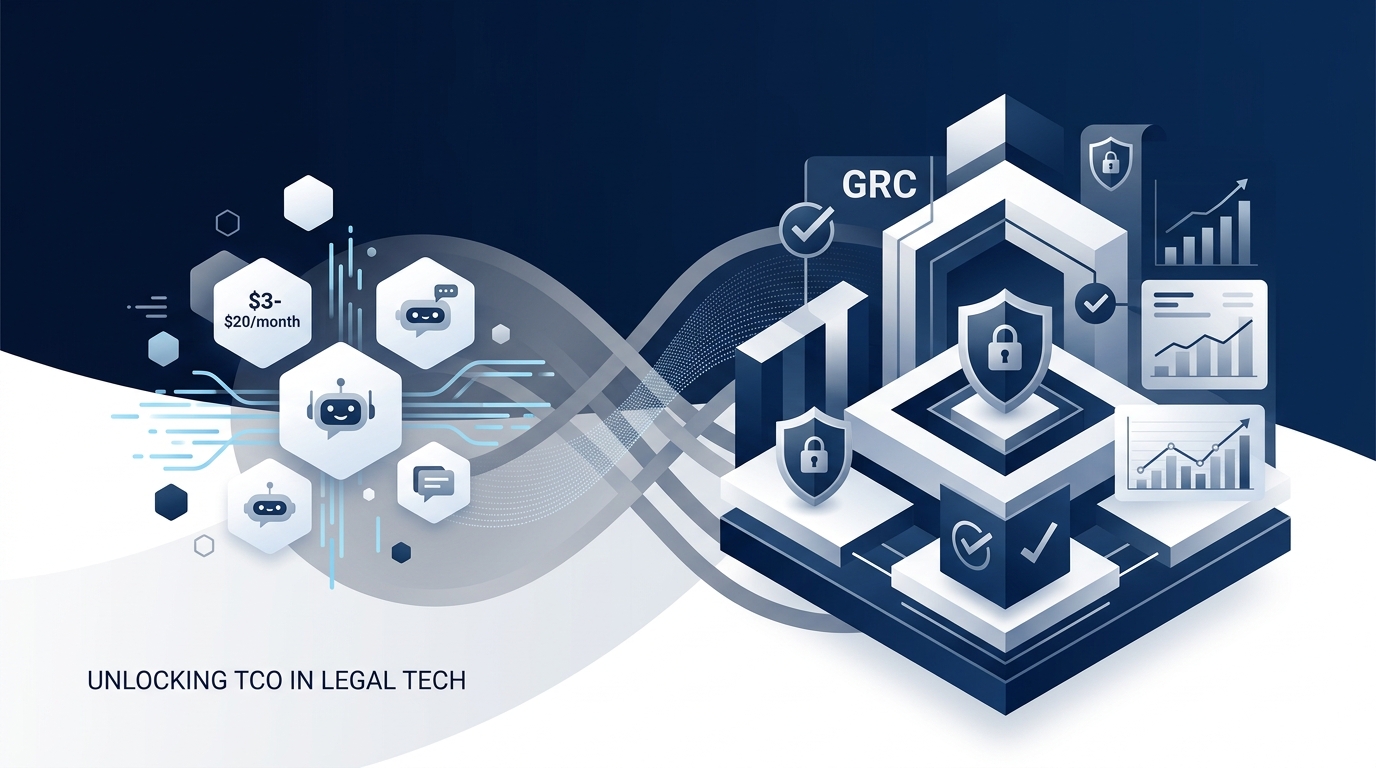
Why Claude Isn't Actually Cheaper Than Your Legal Tech Stack
Direct LLM access looks cheap at $3-20/month, but hidden costs of security, compliance, and operations make on-prem solutions the better TCO choice.
Data Governance Paralysis: Why 78% of Law Firms Stall on AI
Data governance fears block AI adoption at 78% of firms. Private deployment solves compliance concerns while unlocking AI's potential for legal teams.

Why 800+ Lawyers Got Caught Using Fake AI Citations
Nearly 800 lawyers have been sanctioned for citing fake case law generated by AI. Here's how private AI deployment prevents hallucinations in legal research.
White House AI Framework: What AmLaw Firms Must Know
New federal AI policies create compliance mandates for law firms. Analysis of requirements, risks, and how private AI deployment ensures regulatory alignment.
Court Rules AI Chats Not Privileged: Why Law Firms Need Private AI
Federal judge rules AI chats lack attorney-client privilege. Law firms warn clients as private AI becomes essential for legal work confidentiality.
Lexis+ AI Hallucinations: Why Legal AI Accuracy Demands Private Deployment
Lexis+ AI hallucinations expose critical risks in cloud-based legal AI. See how private deployment solves accuracy issues for AmLaw 200 firms.
Client Pressure Forces Law Firms to Prove AI ROI — Here's How
AmLaw 200 firms face mounting client demands for concrete AI strategies and measurable outcomes. Learn how private AI deployment addresses these pressures.

AI Citations Crisis: Why 87% of Lawyers Face Disciplinary Risk
Lawyers face sanctions for AI-generated fake citations. Analysis of disciplinary cases and how private AI deployment prevents fabricated legal research.
Why Data Sovereignty Is the New Competitive Moat in Legal AI
Harvey's $8B valuation masks a hidden risk: shared AI systems teach competitors your strategies. Smart firms are choosing data sovereignty over SaaS.

The Hidden Cost of Legal AI: Why 300-Lawyer Firms Are Spending $4.3M on Tools That Can't Find Their Own Case Files
Legal AI subscriptions cost up to $4.3M/year for large firms, yet can't search internal case files. Compare SaaS costs vs proprietary AI ownership economics.
AI for Law Firms in 2026: The Complete Guide to Choosing, Deploying, and Owning Legal AI
Comprehensive guide to AI adoption for law firms in 2026 — agentic AI, proprietary vs SaaS, privilege implications, pricing, and the ownership model.
The True Cost of Legal AI: SaaS Subscriptions, Hidden Fees, and the Ownership Alternative
The hidden costs of legal AI in 2026 — SaaS subscription economics, the efficiency penalty on billable hours, data sovereignty risks, and why proprietary AI changes the math.
LexisNexis Protégé vs Harvey vs CoCounsel: What's Missing From All Three
Comparison of the three dominant legal AI platforms in 2026 — what each does well, and the blind spot they all share around internal document access.
Harvey AI Costs $1,200/Lawyer/Month. Here's What You Actually Get (and Don't Get).
Detailed Harvey AI pricing analysis for 2026 — per-seat costs, three-year TCO, what's included, what's missing, and how proprietary AI compares.
Agentic AI for Law Firms: What It Actually Means in 2026
What agentic AI actually means for law firms — plain-English definition, what the big players are doing, real deployment examples, and how custom agents differ from SaaS workflows.
The Death of the Billable Hour? Why 55% of Firms Think AI Will Change How They Bill
55% of law firms believe AI will fundamentally alter billing. Analysis of the efficiency penalty under hourly billing and how proprietary AI ownership changes the economics.
Your AI Vendor's Moat Is Your Data. Here's How to Take It Back.
How SaaS AI vendors build competitive moats from your firm's usage data — the shared learning paradox, the dilution problem, and why proprietary AI keeps the compounding advantage with you.
98% of AmLaw 200 Firms Use AI — But Most Still Can't Search Their Own Files
98% AI adoption, but most law firms still can't search their own institutional knowledge. The gap between external AI tools and internal document access — and how to close it.
Heppner v. United States: Why Your Firm's AI Infrastructure Now Determines Privilege
The SDNY ruling that changes how every law firm should think about AI — Judge Rakoff held that documents generated using consumer AI chatbots are not protected by attorney-client privilege.
Stay updated on legal AI
Get the latest insights on legal AI pricing, privilege, and strategy delivered to your inbox.
We use audience and marketing cookies (Google Analytics, LinkedIn). No tracker loads without your consent. Learn more